
Introduction: A Growing Gateway into South Africa’s Manufacturing Industry
South Africa’s manufacturing and engineering sectors continue to play a critical role in economic development and job creation, particularly for young people entering the workforce. Amid rising demand for skilled technical workers, structured training initiatives have become one of the most reliable pathways into sustainable employment. PG Group Tool Fabricator Training Programme 2026
Thank you for reading this post, don't forget to subscribe!One such opportunity is the PG Group Tool Fabricator Training Programme 2026, presented through PG Group and its automotive glass brand Shatterprufe.
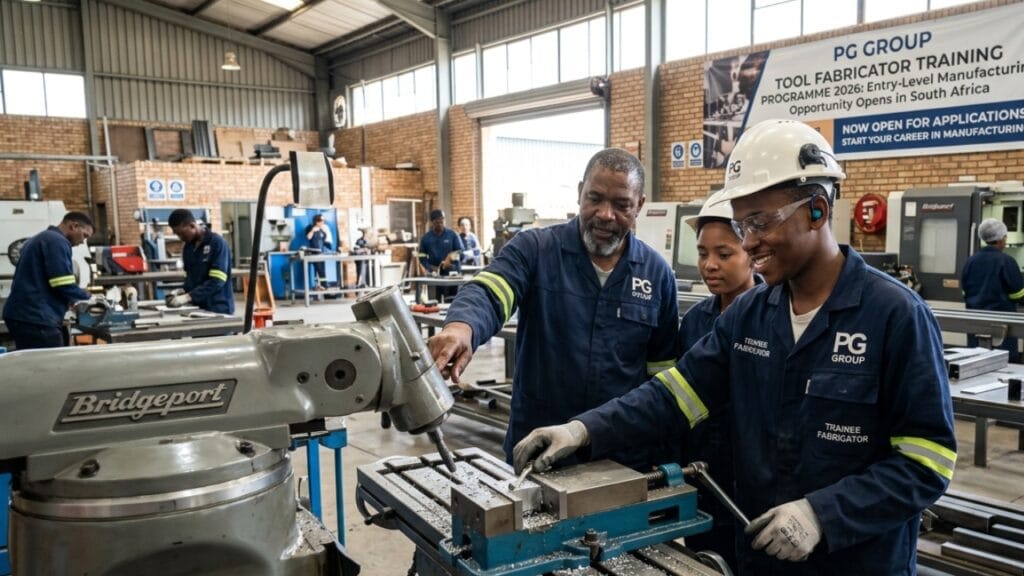
This programme is designed to equip motivated Grade 12 graduates and aspiring technicians with practical, workplace-based experience in fabrication, tooling, welding, and production support within a real industrial environment.
For individuals passionate about hands-on technical work—especially metal fabrication, precision measurement, and engineering processes—this programme represents a significant stepping stone into long-term careers in manufacturing.
What Is the PG Group Tool Fabricator Training Programme 2026?
The PG Group Tool Fabricator Training Programme is a structured skills development initiative aimed at building foundational and intermediate competencies in tool fabrication and manufacturing support.
Tool fabricators are essential in production environments because they design, build, repair, and maintain the tools, molds, and fixtures that keep manufacturing systems running efficiently. In industries such as automotive glass production, precision tooling is critical to ensuring product safety, consistency, and quality.
Through this programme, participants are exposed to real-world manufacturing processes, including:
- Metal cutting and shaping techniques
- Welding and fabrication processes
- Interpretation of engineering drawings
- Precision measurement and tolerance control
- Tool assembly and maintenance
- Production support activities
- Quality assurance practices
The training environment is practical and workplace-based, ensuring learners gain not only theoretical understanding but also direct hands-on experience.
Understanding the Role of a Tool Fabricator
A tool fabricator is a skilled technical worker responsible for creating and maintaining the equipment used in manufacturing production lines. These tools are essential in shaping, assembling, and producing industrial components.
In a manufacturing context such as automotive glass production, tool fabricators contribute to the creation of molds and fixtures that ensure glass components are formed with precision and consistency.
Key Functions of a Tool Fabricator
1. Reading and Interpreting Technical Drawings
Before any fabrication work begins, technical drawings must be analyzed carefully. This includes:
- Understanding engineering blueprints
- Identifying measurements and dimensions
- Selecting appropriate materials
- Interpreting design specifications
- Using reference samples for accuracy
Strong interpretation skills are essential to avoid errors during production.
2. Metal Cutting and Shaping
Raw materials must be transformed into usable components through precise fabrication techniques such as:
- Cutting sheet metal
- Grinding and smoothing surfaces
- Bending and forming materials
- Trimming components for assembly
This stage requires accuracy, patience, and strong attention to detail.
3. Welding and Assembly
Welding is one of the most important processes in fabrication work. Participants may be involved in:
- Joining metal components
- Aligning structural parts
- Bolting assemblies together
- Ensuring structural strength and stability
- Inspecting weld quality
Common welding methods include MIG and TIG welding, depending on the application.
4. Tool and Mold Development
One of the most advanced aspects of the programme is exposure to tool and mold development, particularly in new product development (NPD).
This includes:
- Assisting in fabricating new molds
- Testing tooling against production requirements
- Verifying design accuracy
- Supporting engineering teams in prototype development
5. Quality Verification and Precision Control
Manufacturing relies heavily on precision. Even small deviations can affect production quality.
Tool fabricators must ensure:
- Dimensional accuracy
- Correct tolerances
- Proper alignment of components
- Compliance with manufacturing standards
This reinforces discipline and technical accuracy in all tasks.
Core Responsibilities of Programme Participants
Participants in the training programme may be involved in several practical manufacturing tasks, including:
Raw Material Preparation
- Selecting appropriate metals
- Measuring raw materials accurately
- Preparing components for fabrication
Tool Construction
- Manufacturing tool components
- Assisting in mold creation
- Supporting equipment assembly
Assembly Operations
- Drilling and fastening parts
- Welding structural assemblies
- Verifying alignment and fitment
Production Support
- Assisting production teams with tooling
- Supporting manufacturing processes
- Ensuring tools are available and functional
Product Development Support
- Assisting engineers with prototypes
- Supporting new product introductions
- Helping refine manufacturing processes
Minimum Requirements for Applicants
The programme is designed to be accessible to young South Africans, particularly those at entry-level career stages.
Educational Requirements
- Grade 12 (Matric) is the minimum requirement
- Technical subjects are advantageous, including:
- Mathematics or Technical Mathematics
- Engineering Graphics and Design (EGD)
- Mechanical Technology
- Natural Sciences
Experience Requirements
While not mandatory, the programme notes that approximately 2 years of fabrication experience is desirable. However, this does not exclude applicants without experience, especially those who demonstrate strong technical aptitude and interest.
Key Skills Needed for Success
Applicants who succeed in this programme typically demonstrate a combination of technical and soft skills.
Technical Skills
- Sheet metal work
- Welding (MIG, TIG, arc welding)
- Metal shaping and fabrication
- Mechanical understanding
- Equipment handling
Cognitive and Workplace Skills
- Strong attention to detail
- Problem-solving ability
- Ability to follow technical instructions
- Basic understanding of engineering principles
- Commitment to precision work
These skills are essential in ensuring high-quality manufacturing output.
Career Opportunities After the Programme
Successful completion of the training programme can open doors to several career paths within manufacturing and engineering industries.
Potential roles include:
- Tool Fabricator
- Assistant Toolmaker
- Manufacturing Technician
- Production Support Technician
- Engineering Workshop Assistant
- Junior Maintenance Technician
With experience, individuals may progress into advanced roles in toolmaking, production engineering, or industrial design support.
Industries where these skills are in demand include:
- Automotive manufacturing
- Engineering and metal fabrication
- Mining equipment production
- Construction manufacturing
- Industrial machinery production
How to Apply for the PG Group Tool Fabricator Training Programme 2026
Interested applicants are encouraged to prepare a professional and well-structured application.
Application Reference
- Requisition ID: 3259
Application Tips
To improve your chances of selection:
1. Highlight Relevant Subjects
Include subjects such as:
- Mathematics
- Technical Mathematics
- Engineering Graphics and Design
- Mechanical Technology
2. Showcase Technical Exposure
Mention any experience with:
- School workshops
- Welding practice
- Metalwork projects
- Technical competitions or training
3. Prepare a Professional CV
Your CV should include:
- Personal details
- Educational background
- Technical skills
- Practical experience (if any)
- References
4. Demonstrate Interest in Manufacturing
Employers value applicants who show genuine passion for technical careers and industrial work.
Why Technical Training Matters in South Africa
Technical skills development remains one of the strongest pathways to employment in South Africa’s evolving job market. While many young people focus on administrative or office-based careers, industries such as manufacturing continue to experience a shortage of skilled artisans and technicians.
Programmes like the PG Group Tool Fabricator Training Programme help bridge this gap by providing:
- Practical workplace experience
- Industry-relevant technical training
- Exposure to real manufacturing environments
- Opportunities for long-term employment
For unemployed youth or recent matriculants, this programme offers a realistic entry point into stable, skill-based careers.
Frequently Asked Questions (FAQ)
1. Do I need a college diploma to apply?
No. Only a Grade 12 (Matric) qualification is required.
2. Is previous fabrication experience mandatory?
No. Experience is considered advantageous but not compulsory.
3. What kind of work will participants do?
Participants may assist with welding, metal cutting, tool assembly, mold fabrication, and production support tasks.
4. Can school leavers apply?
Yes. Matriculants with technical interest are encouraged to apply.
5. What industries can I work in after completion?
Graduates can find opportunities in automotive manufacturing, engineering, mining, construction, and industrial production sectors.
6. What is the reference number for this programme?
The official reference number is Requisition ID: 3259.
7. What skills are most important?
Key skills include welding, metal shaping, mechanical aptitude, precision work, and attention to detail.
Conclusion
The PG Group Tool Fabricator Training Programme 2026 stands out as a valuable entry-level opportunity for young South Africans seeking to build practical technical careers. Through structured training in fabrication, welding, tooling, and manufacturing support, participants gain industry-relevant skills that are highly sought after in multiple industrial sectors.
For motivated individuals willing to learn and work with precision, this programme offers more than just training—it offers a foundation for long-term career growth in engineering and manufacturing.
Professional Disclaimer
This article is intended for informational and educational purposes only. Applicants should verify all programme details, requirements, deadlines, and application procedures directly with the official PG Group or Shatterprufe recruitment channels. The publisher is not affiliated with the PG Group and does not guarantee selection or employment outcomes.

Amina Sechaba is a passionate career writer and employment researcher dedicated to helping South Africans find better job opportunities and prepare for successful careers. With years of experience in content writing and career development, Amina creates informative articles, application guides, and interview tips that empower job seekers to reach their full potential. Through her work with Submit Your CV, she aims to simplify the job application process and provide reliable information on learnerships, internships, and career advice for both students and professionals.