
NSFAS Scam Warning Issued as Fraudsters Target Desperate Students Across South Africa
Thousands of South African students applying for financial assistance through the National Student Financial Aid Scheme (NSFAS) are being urged to remain extremely cautious as online scammers intensify efforts to steal personal information and exploit vulnerable applicants. NSFAS scam warning South Africa
Thank you for reading this post, don't forget to subscribe!Over recent months, reports of fraudulent NSFAS messages, fake websites, phishing emails, cloned portals, and misleading social media posts have increased sharply. Students waiting for funding approvals, accommodation placements, or allowance payments are increasingly becoming targets for cybercriminals posing as NSFAS officials.
Authorities and education stakeholders are warning that scammers are using fear, urgency, and financial desperation to manipulate students into handing over sensitive information such as ID numbers, passwords, banking details, and one-time pins (OTPs).
For many young South Africans, NSFAS funding represents the only opportunity to access higher education. Unfortunately, criminals understand how critical these funds are and are exploiting students during one of the most stressful stages of their academic journey.
Growing Concern Over NSFAS-Related Fraud
The rise in NSFAS-related scams has become a serious concern across South Africa’s higher education sector. Fraudsters are aggressively targeting students through multiple channels, including:
- WhatsApp groups
- Fake Facebook pages
- SMS phishing campaigns
- Fraudulent emails
- Cloned NSFAS websites
- Telegram and TikTok posts
- Fake accommodation advertisements
Many of these scams are designed to appear convincing by using official NSFAS branding, logos, and language that closely resembles legitimate communication.
Students are often informed that:
- Their funding application is incomplete
- Their allowances are delayed
- Banking details need urgent verification
- Their funding may be cancelled
- Additional fees are required to release payments
In many cases, these messages include links directing students to fake portals where personal information is harvested.
Why NSFAS Students Are Being Targeted
NSFAS supports hundreds of thousands of students enrolled at universities and Technical and Vocational Education and Training (TVET) colleges across South Africa.
During application and payment periods, anxiety levels among students increase significantly. Many applicants wait for weeks or months to receive updates regarding:
- Funding approval
- Registration confirmation
- Accommodation support
- Monthly allowance payments
- Banking verification
Scammers understand this uncertainty and use it to manipulate students emotionally.
By pretending to offer assistance, fraudsters lure students into believing they can:
- Speed up funding approvals
- Unlock delayed allowances
- Secure student accommodation
- Guarantee funding acceptance
- Resolve payment issues quickly
Some students are even told they must pay “administration fees” or “processing charges” before their allowances can be released.
NSFAS has repeatedly stated that students should never pay anyone to process applications or access funding services.
Fake NSFAS Forms and AI-Generated Content Becoming More Common
One of the most alarming developments is the growing use of manipulated images and AI-generated content to spread misinformation online.
Several fake “NSFAS Confirmation of Funding” forms have recently circulated on social media platforms and messaging apps. These documents are designed to trick students into sharing confidential information.
There have also been false claims suggesting that students received massive once-off NSFAS payments worth hundreds of thousands of rand.
NSFAS has dismissed these reports as fake and misleading.
Experts warn that scammers are increasingly using artificial intelligence tools to create realistic-looking screenshots, documents, videos, and social media posts that can deceive unsuspecting students.
This trend highlights the importance of digital literacy and online safety awareness among young people.
The Most Common NSFAS Scams Students Must Avoid
Fake NSFAS Websites
One of the most dangerous scams involves fake websites designed to look almost identical to the official NSFAS portal.
Students unknowingly enter their usernames, passwords, ID numbers, or banking details into these fraudulent sites. Once scammers obtain this information, they may gain access to student accounts or commit identity fraud.
Students should always double-check website addresses carefully before logging in.
Official NSFAS communication and services should only be accessed through verified platforms.
Phishing Emails and SMS Messages
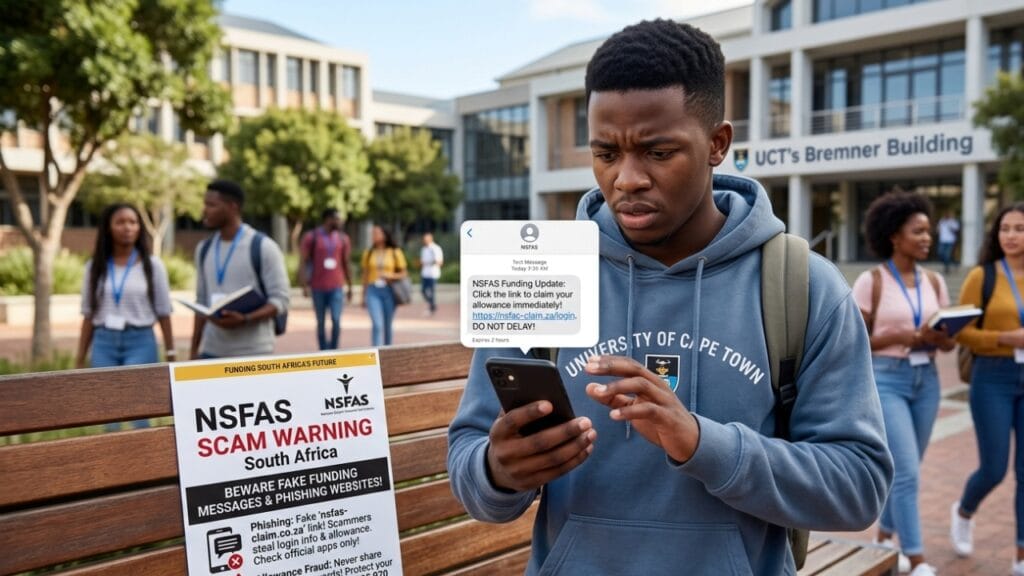
Fraudsters frequently send fake text messages or emails claiming there is a problem with a student’s NSFAS account.
These messages often create panic by stating:
- “Your funding will be cancelled”
- “Verify your banking details immediately”
- “Your allowance payment failed”
- “Urgent account verification required”
The goal is to pressure students into clicking malicious links without verifying the message first.
Once students click the links, they may be redirected to fake websites designed to steal passwords and financial information.
Fake WhatsApp Support Groups
WhatsApp scams targeting NSFAS applicants have become increasingly common.
Fraudsters create groups claiming to offer:
- Funding assistance
- Faster approvals
- Banking verification support
- Accommodation placement
- Allowance processing help
Some scammers ask students to pay upfront fees for “special assistance” or guaranteed approvals.
NSFAS has warned that many of these groups are unofficial and should not be trusted.
Student Accommodation Scams
Accommodation fraud is another growing problem affecting students.
Scammers advertise fake NSFAS-accredited accommodation online and demand deposits for rooms that do not exist.
Students desperate to secure housing before registration periods are particularly vulnerable.
In many cases, fake landlords disappear immediately after receiving payments.
Students are advised to confirm accommodation directly through their institutions or approved NSFAS channels before making any payments.
What NSFAS Will Never Ask Students To Do
According to official fraud prevention guidance, NSFAS will never ask students to:
- Share myNSFAS passwords
- Share OTPs or banking PINs
- Pay fees to process funding applications
- Use unofficial websites or links
- Submit information through random Google Forms
- Trust social media accounts promising guaranteed funding
Students should remember that OTPs and banking PINs are private security tools that should never be shared with anyone.
Legitimate NSFAS representatives will never request confidential login details.
Official NSFAS Communication Channels
Students should only trust information shared through official NSFAS communication channels, including:
- The myNSFAS portal
- Official NSFAS social media accounts
- Institutional financial aid offices
- NSFAS call centres
Relying on unofficial social media posts or forwarded WhatsApp messages can expose students to fraud and misinformation.
How Students Can Protect Themselves From NSFAS Scams
Use Official Platforms Only
Students should only access their funding information through official NSFAS systems.
Avoid clicking links received through SMS, WhatsApp, email, or social media unless the source has been verified.
Double-Check Website URLs
Scammers often create fake websites with addresses that closely resemble official platforms.
Before entering personal information, students should carefully examine website URLs for spelling changes or suspicious variations.
Never Share OTPs or Passwords
One-time pins and passwords are designed to protect accounts from unauthorized access.
Sharing these details with anyone can result in stolen funds or compromised accounts.
Stay Calm During Payment Delays
Fraudsters often create panic by claiming allowances are delayed or funding is about to be cancelled.
Students should avoid making rushed decisions and verify all information through official channels first.
Report Suspicious Messages Immediately
Any suspicious communication claiming to be from NSFAS should be reported immediately to:
- NSFAS support services
- Institutional financial aid offices
- Cybercrime reporting authorities
Quick reporting may help prevent other students from becoming victims.
Social Media Has Become a Major Tool for Scammers
Social media platforms are increasingly being used to spread fake NSFAS information.
Fraudulent posts frequently appear on:
- TikTok
- Telegram
- X (formerly Twitter)
These posts often contain misleading claims regarding:
- Allowance increases
- Secret funding opportunities
- Registration payments
- Early application access
- “Guaranteed” approvals
Some fake accounts even use official-looking logos and branding to appear legitimate.
Experts say the rapid spread of misinformation on social media makes it easier for scammers to exploit students who rely heavily on online platforms for updates.
Why Scam Activity Increases During NSFAS Payment Periods
Scam activity often spikes when NSFAS allowances are being processed.
Students waiting for payments may become anxious and more likely to trust fake messages promising faster access to funds.
Scammers take advantage of delays and verification processes by pretending they can “unlock” payments for a fee.
Students should remember:
- Payment delays do not automatically mean funding has been stolen
- NSFAS does not charge processing fees
- Funding problems should be resolved directly with institutions or NSFAS
Remaining patient and cautious can help students avoid financial loss.
The Importance of Digital Literacy Among Students
The rise in online scams highlights the growing importance of digital literacy in South Africa.
Many students entering higher education may not fully understand phishing tactics, fake websites, or online fraud techniques.
Cybersecurity awareness is becoming increasingly important as more student services move online.
Parents, guardians, schools, and institutions are encouraged to educate students about:
- Online safety
- Scam identification
- Password protection
- Secure browsing habits
- Social engineering tactics
Simple mistakes, such as sharing a password or OTP, can lead to identity theft, financial fraud, and blocked student accounts.
Frequently Asked Questions (FAQs)
Does NSFAS charge students to process applications?
No. NSFAS does not charge students any application or processing fees.
Can NSFAS ask for my password or OTP?
No. NSFAS officials should never request passwords, PINs, or one-time passwords.
Are NSFAS WhatsApp groups official?
Most NSFAS-related WhatsApp groups are unofficial. Students should be cautious when joining groups claiming to offer guaranteed funding assistance.
How can I verify an NSFAS website?
Students should only use the official NSFAS portal and verified communication channels.
Always check website addresses carefully before entering personal information.
What should I do if I shared my information with scammers?
Students who believe they have been scammed should:
- Immediately change passwords
- Contact their bank if banking information was shared
- Report the incident to NSFAS
- Notify their institution’s financial aid office
- Monitor accounts for suspicious activity
Can scammers steal NSFAS allowance payments?
Yes. If fraudsters gain access to banking information or student accounts, they may attempt unauthorized transactions or identity theft.
Why are students especially vulnerable to NSFAS scams?
Students often face financial pressure and uncertainty while waiting for funding updates, making them easier targets for scammers using urgency and emotional manipulation.
Final Advice for South African Students
Students should treat every unexpected NSFAS message with caution, especially if it requests personal information or urgent payments.
Scammers are becoming increasingly sophisticated and often create highly convincing messages designed to exploit fear and desperation.
Taking a few extra minutes to verify information through official channels could prevent serious financial and identity-related consequences.
The safest approach remains simple:
- Use official NSFAS platforms only
- Never pay anyone for funding assistance
- Keep passwords and OTPs private
- Verify all messages before responding
- Report suspicious activity immediately
As online fraud continues to evolve, awareness and caution remain the best protection for South Africa’s student community.
Disclaimer
This article is intended for informational and educational purposes only. Students are encouraged to verify all NSFAS-related information directly through official NSFAS communication channels and their institution’s financial aid office. The publisher is not affiliated with NSFAS and cannot process applications, payments, or funding appeals on behalf of students.

Amina Sechaba is a passionate career writer and employment researcher dedicated to helping South Africans find better job opportunities and prepare for successful careers. With years of experience in content writing and career development, Amina creates informative articles, application guides, and interview tips that empower job seekers to reach their full potential. Through her work with Submit Your CV, she aims to simplify the job application process and provide reliable information on learnerships, internships, and career advice for both students and professionals.