
Introduction: A Growing Opportunity for South African Youth in 2026
South Africa continues to face one of the highest youth unemployment rates in the world, with thousands of young people leaving school each year without access to formal work experience or practical skills. Against this backdrop, Packaging Learnerships 2026 South Africa have emerged as one of the most accessible and impactful pathways into the formal economy.
Thank you for reading this post, don't forget to subscribe!These programmes are designed to provide structured, work-based training in the packaging and manufacturing sector while offering participants a monthly stipend of approximately R4,600. More importantly, they combine classroom learning with hands-on workplace experience, ensuring that learners graduate with both theoretical knowledge and practical skills.
For many unemployed youth, this is not just a training opportunity—it is a stepping stone into long-term employment in industries such as food production, pharmaceuticals, retail supply chains, and fast-moving consumer goods (FMCG).
With applications expected to open throughout the year and many closing around mid-2026, early preparation is essential for anyone hoping to secure a place.
What Are Packaging Learnerships?
Packaging learnerships are structured skills development programmes that fall under South Africa’s national training and education framework. They are typically registered with accredited training authorities and combine two core components:
- Theoretical training delivered by accredited training providers
- Practical workplace experience hosted by companies in the manufacturing and packaging industries
Participants are formally registered as learners and placed on fixed-term contracts, usually lasting 12 months.
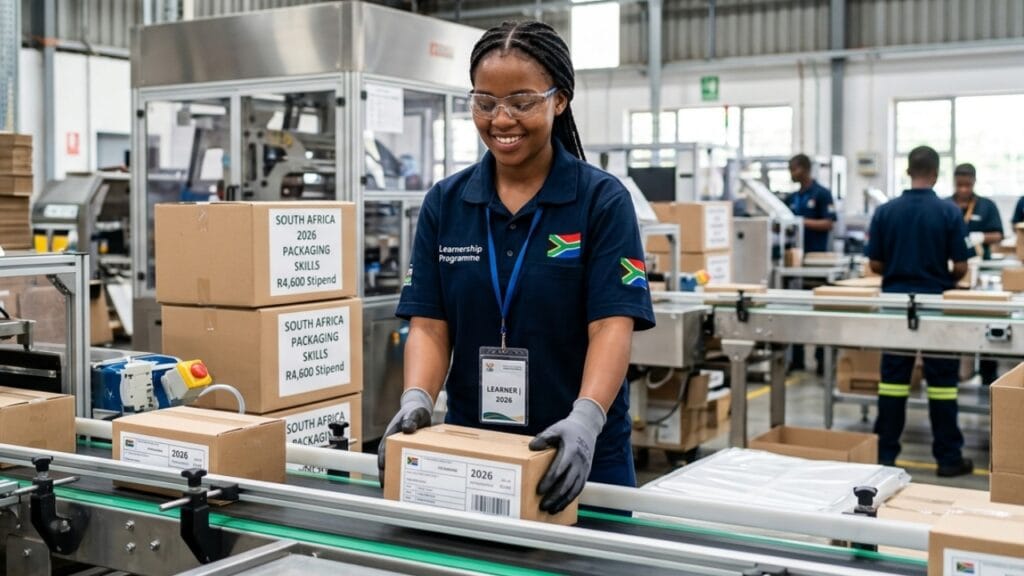
During this time, learners are trained in real production environments where they gain exposure to equipment, safety procedures, quality control systems, and operational processes.
Core Areas of Training
Packaging learnerships typically focus on developing skills in:
- Operating packaging machinery and production equipment
- Supporting manufacturing and assembly lines
- Quality control and inspection procedures
- Safe handling of materials and industrial products
- Basic manufacturing and production processes
- Workplace safety and compliance standards
These skills are highly transferable across multiple industries, making the qualification valuable beyond just one employer or sector.
Why Packaging Learnerships Matter in 2026
The packaging industry plays a crucial role in South Africa’s economy. It supports almost every major sector, from food production to export logistics. Without packaging, supply chains would not function efficiently, and goods would not reach consumers safely.
In 2026, the relevance of packaging learnerships continues to grow due to several key factors:
1. Rising Demand for Entry-Level Manufacturing Skills
Many companies face shortages of trained production workers who understand machinery, safety protocols, and quality standards.
2. Growth of FMCG and Retail Industries
As population growth and consumer demand increase, so does the need for packaged goods in supermarkets, pharmacies, and wholesale markets.
3. Shift Toward Sustainable Packaging
Companies are adopting environmentally friendly materials and processes, creating new skill requirements in modern packaging systems.
4. Youth Unemployment Crisis
Learnerships remain one of the most effective tools for bridging the gap between education and employment for young South Africans without experience.
In this context, Packaging Learnerships 2026 South Africa serve as both a workforce development strategy and a social upliftment programme.
Monthly Stipend: Financial Support During Training
One of the most attractive features of packaging learnerships is the monthly stipend, which is typically around R4,600 per month.
While this is not considered a full salary, it plays an important role in supporting learners throughout the programme.
What the Stipend Helps Cover:
- Daily transport costs to and from the workplace
- Meals during working and training hours
- Basic personal expenses such as communication or toiletries
In some cases, employers may also provide additional support, such as:
- Protective work clothing (PPE)
- Transport allowances or shuttle services
- Safety equipment required in production environments
This financial support allows learners to focus fully on training without needing to seek additional income during the programme.
Requirements for Packaging Learnerships 2026
Although requirements may vary slightly depending on the employer or training provider, most packaging learnerships follow a similar eligibility structure.
Minimum Academic Requirements
Applicants generally need:
- Grade 11 or Grade 12 certificate
- Basic literacy and numeracy skills
Subjects such as Mathematics, Physical Science, or Technical Studies may improve your chances but are not always compulsory.
Age Requirements
- Applicants must be 18 years or older
- Most programmes have no strict upper age limit, although preference is often given to younger applicants
Citizenship and Identification
- Must be a South African citizen or permanent resident
- Valid South African ID document is required
Employment Status
Priority is often given to:
- Unemployed youth
- First-time applicants entering formal work environments
However, meeting minimum requirements does not guarantee selection, as competition is usually high.
Workplace Readiness and Soft Skills
Beyond academic qualifications, employers also look for personal attributes that indicate readiness for industrial work environments.
Successful candidates typically demonstrate:
- Reliability and punctuality
- Willingness to learn and follow instructions
- Ability to work well in teams
- Basic communication skills
- Respect for workplace safety rules
Manufacturing environments are highly structured, and employers value discipline and consistency as much as academic ability.
How to Apply for Packaging Learnerships 2026
The application process is usually straightforward but requires attention to detail.
Step 1: Find Available Opportunities
Learnerships are advertised throughout the year by companies, training providers, and government-supported programmes.
Applicants should regularly check job portals, company websites, and career platforms.
Step 2: Prepare Required Documents
Before applying, ensure you have:
- Updated Curriculum Vitae (CV)
- Certified copy of your South African ID
- Certified copy of your highest qualification
- Proof of residence (if requested)
All documents must be clear, valid, and recently certified.
Step 3: Submit Your Application
Most applications are completed online. When applying:
- Fill in all required fields accurately
- Upload documents in the correct format
- Double-check contact details (email and phone number)
Incorrect or incomplete applications are often automatically disqualified.
Step 4: Selection Process
Shortlisted candidates may go through:
- Basic numeracy and literacy assessments
- Psychometric or behavioural evaluations
- Interviews (online or in person)
This stage is designed to assess suitability for structured workplace training.
What Happens During the Learnership?
Once selected, learners are placed at a host company and registered with an accredited training provider.
The programme is structured to balance theory and practice.
Learners will typically:
- Attend scheduled classroom training sessions
- Work on production lines under supervision
- Complete logbooks or portfolios of evidence
- Participate in regular assessments
Performance is monitored continuously, including attendance, attitude, and skill development.
Career Opportunities After Completion
One of the most important advantages of packaging learnerships is their strong employment potential after completion.
While placement is not guaranteed, many learners are absorbed into the workforce based on performance.
Common Entry-Level Roles Include:
- Packaging machine operator
- Production assistant
- Quality control assistant
- Warehouse or materials handler
With experience, learners can progress into:
- Supervisory roles
- Technical specialist positions
- Production management pathways
- Further studies at TVET colleges or accredited institutions
This makes packaging learnerships not just a short-term opportunity, but a foundation for long-term career growth.
Tips to Succeed in a Packaging Learnership
Success in a learnership depends heavily on attitude and consistency.
Practical Tips:
- Treat the learnership like a full-time job
- Arrive on time every day
- Ask questions and learn from supervisors
- Follow all safety instructions carefully
- Manage your stipend responsibly
- Build professional relationships in the workplace
Learners who show commitment and discipline often improve their chances of being retained after the programme ends.
Frequently Asked Questions (FAQs)
1. Is the R4,600 stipend guaranteed?
The stipend is typical but may vary depending on the employer or training provider. Most packaging learnerships offer a similar monthly allowance.
2. Can I apply with Grade 11?
Yes. Many programmes accept Grade 11, although Grade 12 applicants may have a competitive advantage.
3. Do I need work experience to apply?
No prior work experience is required. These programmes are specifically designed for beginners.
4. Are learnerships permanent jobs?
No. Learnerships are fixed-term training contracts. However, strong performance can lead to permanent employment.
5. When do applications close?
Closing dates vary, but many Packaging Learnerships 2026 South Africa opportunities are expected to close between early and mid-2026.
6. Will I get a qualification?
Yes. Successful completion results in an accredited qualification recognised within the manufacturing and packaging industry.
Conclusion: A Real Pathway Into Employment for 2026
Packaging Learnerships 2026 South Africa represent one of the most practical and accessible entry points into the job market for unemployed youth. By combining structured training, workplace experience, and a monthly stipend, these programmes offer far more than temporary income—they provide a foundation for long-term career development.
In a challenging economic environment, opportunities like these stand out because they do not require prior experience and instead focus on potential, discipline, and willingness to learn.
For young South Africans ready to commit to growth and responsibility, packaging learnerships remain a powerful first step toward financial independence and career stability.
Early preparation, accurate applications, and a professional attitude remain the strongest factors for success.
Professional Disclaimer
This article is intended for informational and educational purposes only. Learnership details such as stipend amounts, requirements, and closing dates may vary depending on the employer, training provider, or relevant authorities. Applicants are encouraged to verify all information directly from official company or programme announcements before applying.

Amina Sechaba is a passionate career writer and employment researcher dedicated to helping South Africans find better job opportunities and prepare for successful careers. With years of experience in content writing and career development, Amina creates informative articles, application guides, and interview tips that empower job seekers to reach their full potential. Through her work with Submit Your CV, she aims to simplify the job application process and provide reliable information on learnerships, internships, and career advice for both students and professionals.