
Introduction: A Turning Point for NSFAS
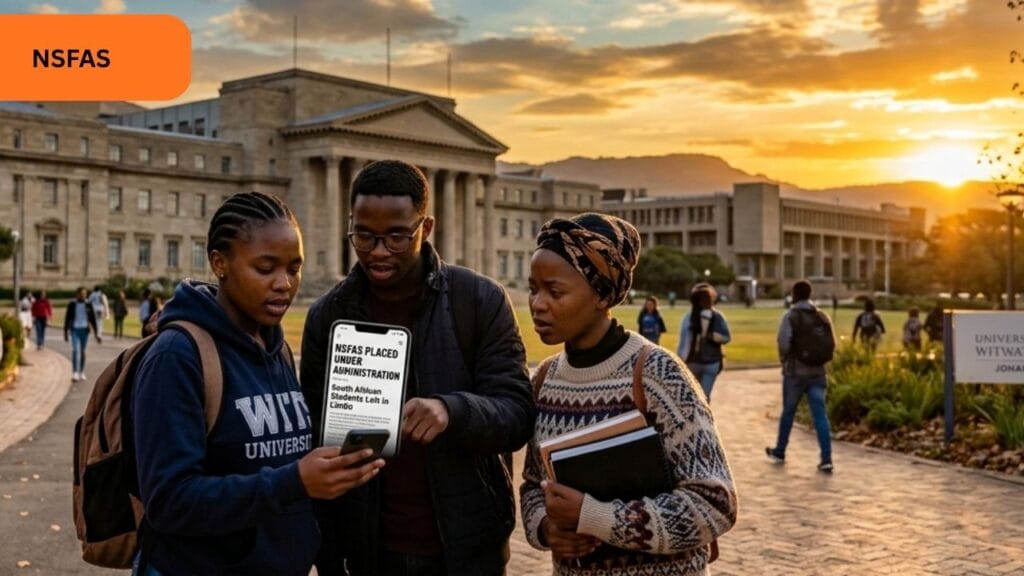
On May 4, 2026, the National Student Financial Aid Scheme (NSFAS) entered a new phase under direct government administration. This move by the South African government marks one of the most significant interventions in the country’s higher education funding system in recent years. NSFAS administration May 2026
Thank you for reading this post, don't forget to subscribe!The decision did not come suddenly. It followed weeks of escalating instability, leadership disputes, and mounting concerns about governance and financial management. For students who depend on NSFAS funding, the big question is simple: what happens next?
This article provides a clear, factual, and comprehensive breakdown of the situation—what led to the intervention, what “administration” actually means, and how it will affect students in 2026 and beyond.
What Is NSFAS and Why It Matters
The National Student Financial Aid Scheme (NSFAS) is a government-funded organization responsible for providing financial support to eligible students at public universities and TVET colleges in South Africa.
For millions of students, NSFAS is not just support—it is the difference between accessing higher education or being excluded from it.
Funding typically covers:
- Tuition fees
- Accommodation
- Monthly allowances (food, transport, personal care)
- Learning materials
Given its scale and importance, any disruption to NSFAS has nationwide implications.
Why NSFAS Was Placed Under Administration
The decision to place NSFAS under administration was driven by a combination of governance failures, financial concerns, and operational breakdowns.
1. Leadership and Governance Crisis
Reports revealed deep instability at the leadership level, including:
- Board-level conflicts and infighting
- Disagreements over the appointment of a CEO
- Resignations of key board members
- Allegations of interference in decision-making
This breakdown made effective governance nearly impossible and undermined confidence in the institution.
2. Financial Mismanagement Concerns
Investigations and audits flagged serious financial issues, including:
- Misallocation of funds
- Weak financial controls
- Poor oversight systems
- Suspected irregularities involving billions of rand
Accommodation payments were particularly problematic, with reports of:
- Overcharging landlords
- “Ghost” accommodation providers
- Lack of proper verification systems
These issues raised urgent concerns about whether public funds were being used responsibly.
3. System Failures Affecting Students
Perhaps the most critical trigger for intervention was the direct impact on students. Persistent problems included:
- Late allowance payments
- Delays in funding confirmations
- Disputes over accommodation
- Poor communication with students
These operational failures disrupted academic progress and placed financial strain on thousands of students.
What Does “Administration” Mean?
When an institution like NSFAS is placed under administration, it does not mean it is shutting down.
Instead:
- The current board and executive leadership lose control
- A government-appointed administrator takes over
- The goal is to stabilize governance, finances, and operations
NSFAS continues to operate, but under strict oversight and restructuring.
This approach has been used in South Africa before when public institutions face serious dysfunction.
What This Means for Students in 2026
1. Your NSFAS Funding Continues
The most important point is this:
NSFAS funding has not been cancelled.
- Approved students will continue to receive funding
- Existing funding agreements remain valid
- Applications and appeals are still being processed
The intervention is aimed at fixing the system—not removing financial support.
2. Payment Systems Are Changing
One of the biggest reforms is the shift to direct payment systems, which aim to:
- Pay allowances directly to students
- Reduce reliance on third-party intermediaries
- Improve transparency and tracking
However, during this transition:
- Some delays are likely
- Payment timelines may shift temporarily
Students should expect short-term disruption for long-term improvement.
3. Accommodation System Overhaul
Accommodation has been one of the most problematic areas.
The new system will:
- Only approve verified accommodation providers
- Eliminate fraudulent or “ghost” listings
- Prevent price inflation and exploitation
While this improves safety and fairness, it may also:
- Require re-verification of accommodation
- Cause temporary placement delays
4. Stricter Verification and Compliance
Universities and colleges will now face tighter requirements, including:
- More rigorous student data verification
- Stronger financial compliance rules
- Increased accountability for errors
For students, this means:
- More document checks
- Possible delays in approval processes
- Greater emphasis on accurate information
5. Applications and Appeals Still Open
NSFAS continues to manage:
- Funding applications
- Appeals for rejected applicants
- Payment schedules
Students can still:
- Submit appeals
- Track application status
- Receive funding confirmations
The Bigger Picture: Why This Could Be Positive
While the situation may seem like a crisis, administration is often used as a reset mechanism.
If implemented effectively, this intervention could:
- Eliminate corruption and fraud
- Strengthen financial controls
- Improve payment reliability
- Restore trust in NSFAS
For students, this could lead to:
- More consistent payments
- Better communication
- A more transparent funding system
What Students Should Do Right Now
Stay Informed
Rely only on official NSFAS updates. Avoid misinformation on social media.
Keep Documents Updated
Ensure all required documents are accurate and up to date:
- Identity documents
- Proof of income
- Academic records
Monitor Your Payments
Track your allowances and report any issues immediately.
Be Patient but Alert
Expect delays—but follow up if problems persist.
Expert Insight: Why This Moment Matters
The administration of NSFAS sends a dual message:
- There were serious systemic failures
- Those failures are now being addressed decisively
Students who stay organized and responsive during this period are more likely to benefit from the improved system.
Frequently Asked Questions (FAQs)
Is NSFAS shutting down?
No. NSFAS is still operating, but under government administration.
Will I still receive my allowance?
Yes, although payment timing may be temporarily affected during system changes.
Can I still apply for NSFAS funding?
Yes. Applications and funding processes are continuing as normal.
What is the biggest change?
The introduction of direct payment systems and stricter financial controls.
Should students be worried?
There is no need to panic, but staying informed and proactive is essential.
Conclusion: A Critical Reset for Student Funding
The placement of the National Student Financial Aid Scheme under administration on May 4, 2026, is a serious but necessary intervention.
It highlights deep-rooted challenges—but also creates an opportunity to rebuild a more reliable and transparent system.
For students, the key takeaway is clear:
Your funding remains in place, but the system around it is being restructured.
If managed effectively, this could mark the beginning of a stronger, more accountable NSFAS that better serves South Africa’s students for years to come.
Disclaimer
This article is based on publicly available information and official updates as of May 2026. NSFAS policies, timelines, and processes may change. Students are advised to verify all information through official NSFAS communication channels.

Amina Sechaba is a passionate career writer and employment researcher dedicated to helping South Africans find better job opportunities and prepare for successful careers. With years of experience in content writing and career development, Amina creates informative articles, application guides, and interview tips that empower job seekers to reach their full potential. Through her work with Submit Your CV, she aims to simplify the job application process and provide reliable information on learnerships, internships, and career advice for both students and professionals.