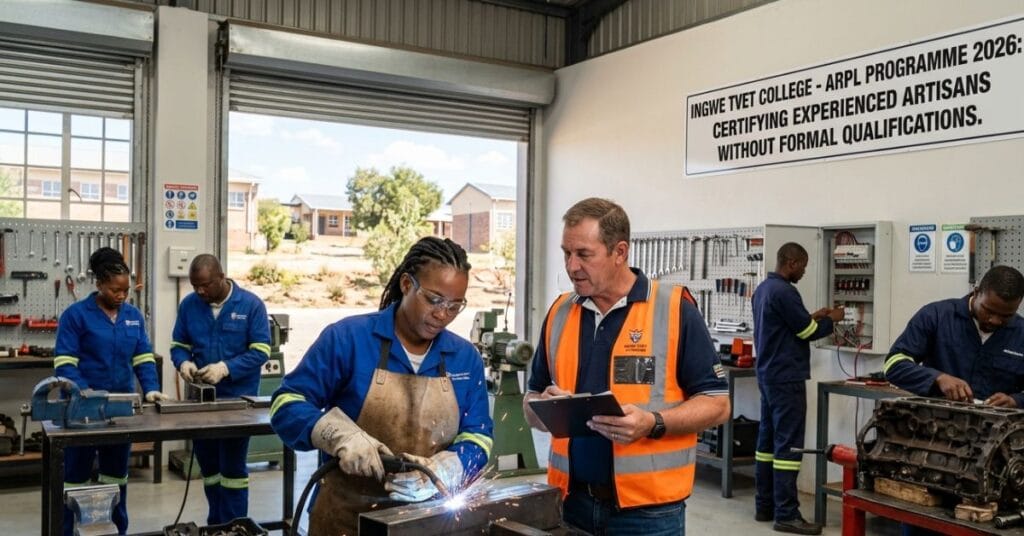
South Africa continues to face a shortage of formally certified artisans across critical sectors such as electrical work, plumbing, welding, and motor mechanics. In response, Ingwe TVET College, in partnership with the Energy and Water Sector Education and Training Authority (EWSETA), has launched the Artisan Recognition of Prior Learning (ARPL) Programme 2026. Ingwe TVET College ARPL Programme 2026
Thank you for reading this post, don't forget to subscribe!This initiative offers a powerful opportunity for skilled individuals who have gained hands-on experience but lack formal qualifications to finally receive nationally recognised artisan certification.
If you have been working in a technical trade for years without a certificate, this programme could transform your career.
What Is the ARPL Programme?
The Artisan Recognition of Prior Learning (ARPL) programme is designed to assess and recognise the practical skills and knowledge individuals have acquired through work experience.
Instead of starting from scratch in a traditional apprenticeship, ARPL allows experienced workers to:
- Have their existing skills formally evaluated
- Align their experience with national occupational standards
- Gain access to trade testing opportunities
- Progress toward becoming certified artisans
The programme is supported by the Department of Higher Education and Training (DHET) and aims to bridge the gap between informal work experience and formal recognition.
Quick Overview of the Programme
- Programme Name: Artisan Recognition of Prior Learning (ARPL) Programme 2026
- Training Provider: Ingwe TVET College
- Funding Partner: EWSETA
- Supporting Authority: Department of Higher Education and Training
- Application Closing Date: 10 April 2026
- Total Opportunities: 103 positions
- 63 unemployed candidates
- 40 employed beneficiaries
This intake ensures that both job seekers and currently employed individuals can benefit from formal certification pathways.
Trades Available in the 2026 Intake
The programme targets high-demand technical trades. Applicants with proven experience in the following areas are encouraged to apply:
Electrical Trade (RPL Pathway)
Ideal for candidates with experience in:
- Electrical installations
- Wiring systems
- Maintenance and repairs
- Industrial electrical systems
- Residential electrical work
Motor Mechanics Trade
Suitable for individuals experienced in:
- Vehicle servicing
- Engine repairs
- Diagnostics and fault finding
- Workshop assistance roles
Welding Trade
Recommended for candidates with skills in:
- Structural welding
- Fabrication
- Pipe welding
- Workshop production environments
Plumbing Trade
For applicants with experience in:
- Pipe installation
- Water systems
- Drainage systems
- Plumbing maintenance
If you have been actively working in any of these trades for at least three years, this programme is tailored for you.
Minimum Requirements to Apply
To qualify for the Ingwe TVET College ARPL Programme 2026, applicants must meet the following criteria:
- Minimum of 3 years relevant industry experience
- South African citizenship
- No formal artisan certification in the applied trade
Required Documents
Applicants must prepare and submit:
- Updated Curriculum Vitae (CV)
- Certified copy of ID document
- Certified copies of qualifications (if available)
- Service letter confirming at least 3 years of experience
Important Note About the Service Letter
The service letter is a critical requirement and must clearly outline:
- Duration of employment
- Duties performed
- Type of technical work handled
- Workplace exposure
Applications without valid proof of experience may not be considered.
Who Should Apply?
This programme is ideal for individuals who have practical skills but lack formal recognition, including:
- Workshop assistants
- Electrical assistants
- Plumbing assistants
- Informal mechanics
- Welding technicians
- Construction workers
- Maintenance personnel
It is especially beneficial for those who have gained experience informally or through on-the-job training but have not yet obtained a trade certificate.
Benefits of the ARPL Programme
Participating in the ARPL programme offers several career advantages:
1. Formal Recognition of Skills
Your work experience is assessed and recognised against national standards.
2. Access to Trade Testing
Successful candidates may qualify to proceed toward official trade tests.
3. Improved Employment Opportunities
Employers prefer candidates with verified and certified competencies.
4. Higher Earning Potential
Certified artisans often earn more than uncertified workers.
5. Career Advancement
Opens doors to advanced training, apprenticeships, and artisan registration pathways.
ARPL vs Traditional Apprenticeship: Key Differences
Many applicants confuse Recognition of Prior Learning with traditional apprenticeships.
Traditional Apprenticeship
- Starts at beginner level
- Includes structured classroom and workplace training
- Takes several years to complete
Recognition of Prior Learning (ARPL)
- Evaluates existing skills and experience
- Shortens the training process
- Focuses on preparing candidates for certification
ARPL is one of the fastest routes for experienced individuals to become formally recognised artisans.
How to Apply for the Ingwe TVET College ARPL Programme 2026
Interested candidates must submit their applications via email.
Application Email:
Include the Following:
- Certified ID copy
- Certified qualifications
- Updated CV
- Service letter confirming experience
Enquiries:
- Contact Person: Mr Mpiti
- Phone: 039 940 2142
Deadline:
- 10 April 2026
Late or incomplete applications may not be considered, so early submission is strongly recommended.
Tips to Strengthen Your Application
To improve your chances of selection, consider the following:
- Ensure your service letter clearly details your duties and experience
- Certify all documents at a recognised authority (e.g., SAPS)
- Use a professional subject line when sending your email
- Double-check that all documents are clear and readable
- Submit your application before the deadline
Strong applications typically include clear evidence of hands-on experience and relevant technical exposure.
What Happens After You Apply?
Once applications are submitted:
- Documents are reviewed for eligibility
- Experience is assessed against occupational standards
- Shortlisted candidates may be contacted for further evaluation
- Successful applicants proceed into the ARPL pathway
Final progression toward trade testing depends on assessment outcomes.
Why This Programme Matters in South Africa
South Africa’s economy depends heavily on skilled artisans, yet many experienced workers remain uncertified. Programmes like the Ingwe TVET College ARPL initiative help to:
- Formalise informal skills
- Reduce unemployment
- Address artisan shortages
- Improve workforce quality
By recognising real-world experience, ARPL creates inclusive opportunities for economic growth and skills development.
Frequently Asked Questions (FAQs)
1. Is this programme only for unemployed candidates?
No. The programme includes both:
- 63 unemployed candidates
- 40 employed beneficiaries
Both groups are encouraged to apply.
2. Do I need a trade certificate to apply?
No. This programme is specifically designed for individuals without formal certification but with relevant work experience.
3. Can I apply if I worked informally without a contract?
Yes. However, you must provide a service letter confirming your experience and duties.
4. Does the programme offer a stipend?
Some EWSETA-supported programmes include stipends, but this depends on funding structures. Applicants should confirm during enquiries.
5. Will this programme lead directly to trade testing?
The programme prepares candidates for trade testing, but final eligibility depends on assessment results.
6. Can I apply with less than 3 years of experience?
No. A minimum of three years industry experience is required.
Final Reminder
The Ingwe TVET College ARPL Programme 2026 presents a rare and valuable opportunity for experienced artisans to gain formal recognition and advance their careers.
With limited spaces available and a strict deadline of 10 April 2026, interested candidates should act quickly and ensure their applications are complete and accurate.
Disclaimer
This article is for informational purposes only. Applicants are encouraged to verify all programme details directly with Ingwe TVET College or EWSETA. Selection decisions and recruitment outcomes remain the responsibility of the official programme administrators.

Amina Sechaba is a passionate career writer and employment researcher dedicated to helping South Africans find better job opportunities and prepare for successful careers. With years of experience in content writing and career development, Amina creates informative articles, application guides, and interview tips that empower job seekers to reach their full potential. Through her work with Submit Your CV, she aims to simplify the job application process and provide reliable information on learnerships, internships, and career advice for both students and professionals.