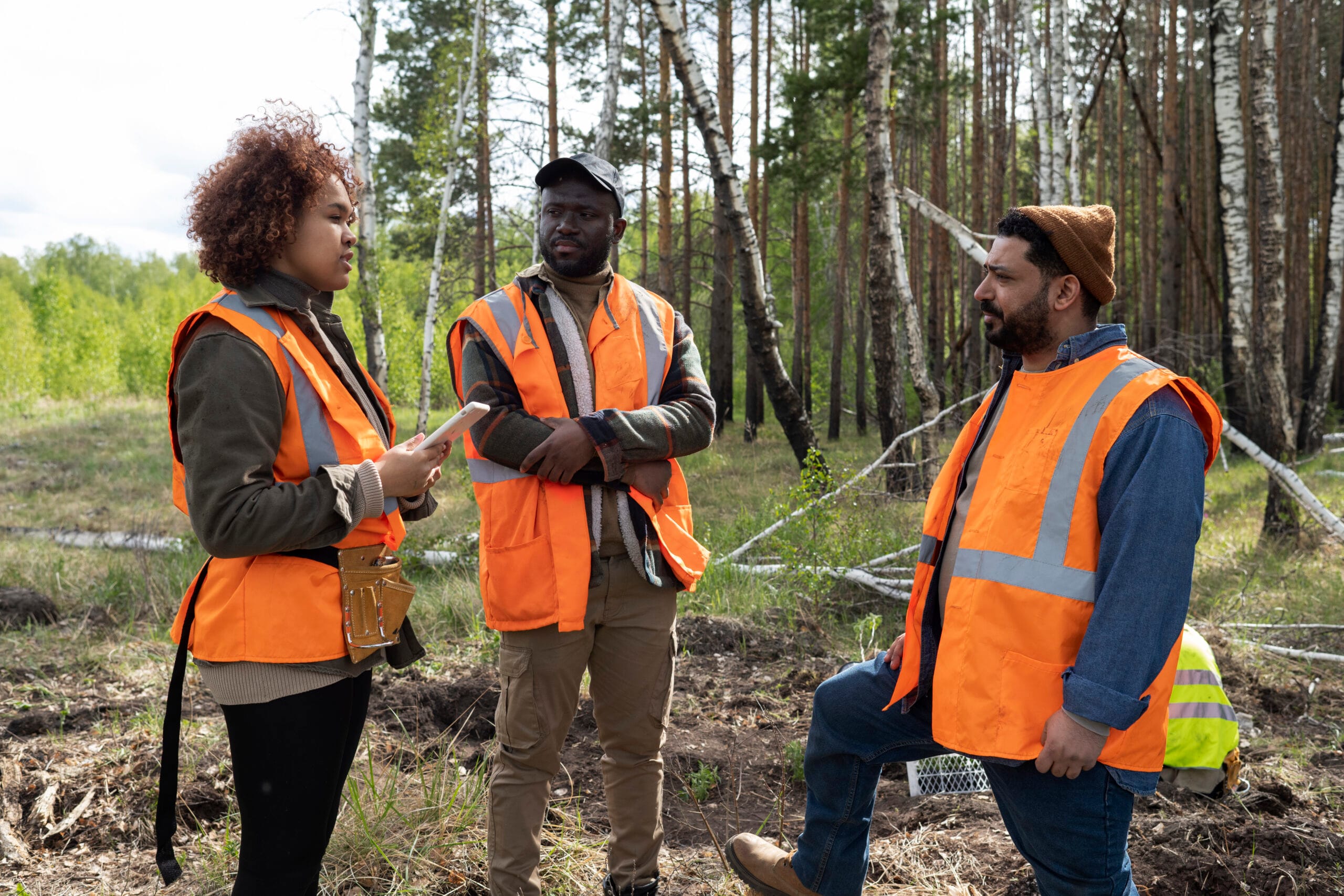
Necsa Opens Applications for Its 2026 Graduate Researcher Programme to Develop Future STEM Leaders
South African graduates seeking to launch careers in science, engineering, and advanced technology now have a valuable opportunity to gain industry experience through the Necsa Graduate Researcher Programme 2026.
Thank you for reading this post, don't forget to subscribe!The Nuclear Energy Corporation of South Africa (Necsa), through its Necsa Learning Academy (NLA), has officially announced applications for a 24-month Graduate in Training (GIT) Programme aimed at attracting talented graduates who are eager to contribute to the country’s growing nuclear science, research, and technology sectors.
The programme is designed to bridge the gap between academic learning and professional practice by giving graduates exposure to real-world projects, structured mentorship, and technical development opportunities within one of South Africa’s leading scientific and technological organizations.
With applications closing on 19 June 2026, eligible graduates are encouraged to submit their applications as soon as possible.
What Is the Necsa Graduate Researcher Programme?
The Necsa Graduate Researcher Programme is a structured two-year training initiative created to equip young professionals with practical experience in scientific research, engineering innovation, and technology development.
The programme targets graduates from various Science, Technology, Engineering, and Mathematics (STEM) disciplines who have recently completed their studies and are looking to gain workplace exposure while building specialized technical expertise.
Participants will work alongside experienced scientists, engineers, and technical specialists, allowing them to apply theoretical knowledge gained at university to real projects that support South Africa’s nuclear and technological advancement goals.
The programme forms part of Necsa’s broader commitment to national skills development and the cultivation of future leaders within the scientific community.
About Necsa and Its Role in South Africa
Necsa plays a critical role in South Africa’s scientific and technological landscape.
As a leading organization in nuclear research, energy innovation, and industrial technology applications, Necsa contributes significantly to scientific advancement, research development, and the commercialization of innovative technologies.
The organization invests heavily in developing future talent through initiatives such as the Graduate in Training Programme, ensuring that South Africa continues to produce highly skilled professionals capable of driving innovation and economic growth.
The programme also aligns with Necsa’s core values of:
- Excellence
- Accountability
- Safety and Security
- Integrity
- Innovation
These values serve as the foundation for professional development throughout the training period.
Why This Programme Matters for Graduates
Many graduates struggle to secure employment due to a lack of workplace experience despite possessing strong academic qualifications.
The Necsa Graduate Researcher Programme addresses this challenge by providing structured practical training in a professional environment where participants can develop both technical and professional skills.
Graduates selected for the programme will have opportunities to:
- Gain industry-relevant experience
- Work on real research and development projects
- Learn from experienced mentors
- Develop leadership capabilities
- Build technical competence
- Expand professional networks
- Improve employability within the STEM sector
For many participants, the programme could serve as a critical stepping stone toward long-term careers in science, engineering, technology, and research.
Key Benefits of the Necsa Graduate Researcher Programme 2026
Structured Workplace Training
Participants will rotate through various functions and projects, gaining exposure to different aspects of research, development, engineering, and operational environments.
This practical approach helps graduates understand how multidisciplinary teams collaborate to solve complex technological challenges.
Hands-On Project Experience
Unlike purely academic programmes, the Graduate in Training Programme places participants directly into meaningful projects.
Graduates will contribute to initiatives that support scientific innovation, technological advancement, and sustainable development within the nuclear and related industries.
Expert Mentorship
One of the programme’s most valuable features is access to experienced mentors.
Participants will receive continuous guidance, coaching, and feedback from professionals who possess extensive expertise in their respective fields.
This mentorship helps graduates navigate technical challenges while accelerating professional growth.
Technical and Professional Development
The programme combines workplace learning with formal development activities.
Participants may benefit from:
- Technical workshops
- Specialist training courses
- Professional development sessions
- Leadership development activities
- Communication skills training
- Problem-solving exercises
This balanced approach ensures graduates develop both technical excellence and workplace readiness.
Career Growth Opportunities
Although successful completion does not guarantee permanent employment, the programme is designed to prepare graduates for future opportunities within highly specialized scientific and engineering sectors.
The experience gained can significantly strengthen a graduate’s professional profile.
Main Responsibilities of Graduate Researchers
Successful candidates will participate in a wide range of activities aimed at building technical expertise and professional competence.
Key responsibilities include:
Supporting Research and Development Projects
Graduates will collaborate with multidisciplinary teams involved in designing, developing, and implementing research and development initiatives.
This exposure helps participants understand the full lifecycle of scientific and technological projects.
Scientific Testing and Equipment Optimization
Participants may assist with:
- Laboratory activities
- Equipment testing
- Scientific experiments
- Facility setup
- Process optimization
These responsibilities provide valuable practical experience in technical environments.
Data Analysis and Reporting
Graduates will be expected to:
- Collect data
- Analyze results
- Interpret findings
- Prepare technical reports
- Recommend improvements
These skills are essential for careers in science, engineering, and research.
Promoting Innovation
Necsa encourages graduates to contribute fresh ideas and innovative solutions that improve operational efficiency and project outcomes.
Ensuring Compliance and Safety
Safety remains a critical priority within scientific and nuclear environments.
Participants will learn and follow strict health, safety, environmental, and quality standards throughout the programme.
Professional Development Participation
Graduates will actively engage in mentorship sessions, performance reviews, training activities, and career development programmes designed to support their growth.
Qualifications and Eligibility Requirements
Necsa is seeking highly motivated South African graduates who meet specific academic and personal requirements.
Citizenship Requirement
Applicants must:
- Be South African citizens
- Be between 18 and 35 years old
Academic Qualifications
The programme welcomes applicants with qualifications in various STEM disciplines, including:
Science Qualifications
- Bachelor of Pharmacy (BPharm)
- MSc Chemistry
- MSc Material Sciences
- MSc Physics
Engineering Qualifications
- BEng Honours
- BSc Honours
- MEng degrees in:
- Software Engineering
- Control Systems
- Electronics Engineering
- Mechanical Engineering
- Metallurgical Engineering
Candidates should possess strong academic performance, particularly in core STEM subjects.
Work Experience Requirements
One of the most attractive aspects of this opportunity is that prior full-time employment is not required.
Recent graduates are encouraged to apply even if they have never worked professionally.
However, experience gained through:
- Internships
- Research projects
- Vacation work
- Academic laboratory projects
may strengthen an application.
Skills Necsa Is Looking For
Beyond academic qualifications, Necsa seeks graduates who demonstrate strong professional and personal attributes.
Preferred skills include:
Communication Skills
Applicants should possess strong written and verbal communication abilities to work effectively in collaborative environments.
Analytical Thinking
The ability to analyze complex problems and develop practical solutions is highly valued.
Teamwork and Collaboration
Successful participants must be able to work effectively with multidisciplinary teams.
Computer Literacy
Candidates should be proficient in:
- Microsoft Office
- Technical software
- Modelling tools
- Simulation applications relevant to their discipline
Time Management
Strong organizational skills and the ability to meet deadlines are essential.
Leadership Potential
Necsa values individuals who demonstrate initiative, adaptability, curiosity, and the potential to become future leaders.
Important Information Applicants Should Know
Before applying, candidates should take note of several important conditions.
Employment Is Not Guaranteed
Participation in the programme does not automatically result in permanent employment with Necsa.
The programme’s primary purpose is skills development and professional training.
Accommodation Is Not Provided
Applicants should make their own arrangements regarding accommodation and transportation if selected.
Persons with Disabilities Are Encouraged to Apply
Necsa supports diversity and inclusion and welcomes applications from persons living with disabilities.
No Hand-Delivered Applications
Applications submitted by hand will not be accepted and may result in automatic disqualification.
Application Deadline
Applications for the Necsa Graduate Researcher Programme 2026 close on:
19 June 2026
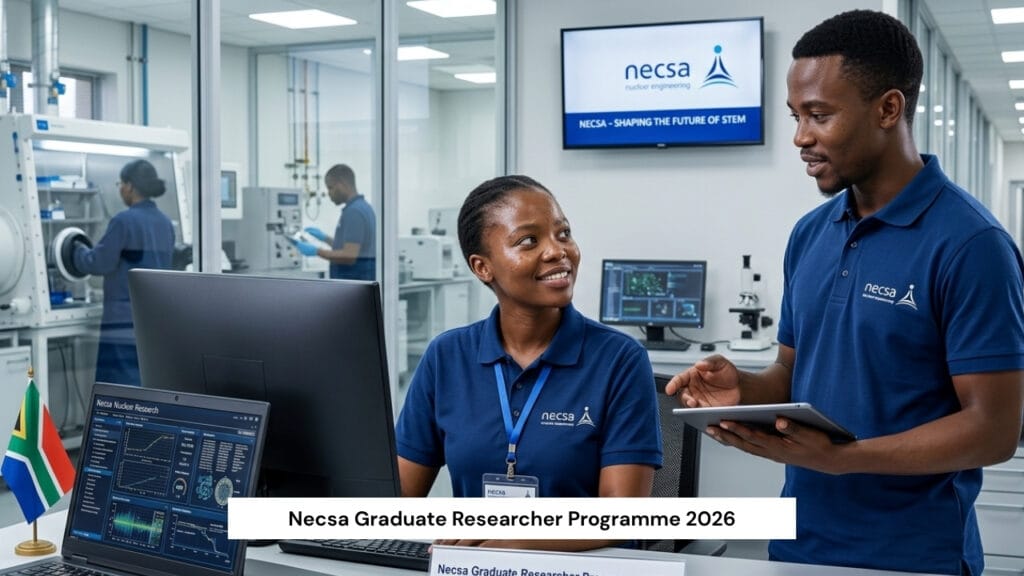
Interested candidates are encouraged to submit their applications well before the deadline to avoid last-minute issues.
Only shortlisted candidates will be contacted for interviews.
Applicants who do not receive feedback within 30 days after the closing date should consider their applications unsuccessful.
Frequently Asked Questions (FAQs)
Is the Necsa Graduate Researcher Programme paid?
The advertisement indicates that participants will be employed under a structured Graduate in Training programme. However, specific stipend or salary figures were not disclosed. Compensation is described as market-related.
How long is the programme?
The programme runs for 24 months.
Do I need work experience to apply?
No. Recent graduates without full-time work experience are encouraged to apply.
Which fields of study qualify?
Eligible fields include Chemistry, Physics, Material Sciences, Pharmacy, Mechanical Engineering, Electronics Engineering, Metallurgical Engineering, Software Engineering, and Control Systems Engineering.
Will I get a permanent job after completing the programme?
No. Successful completion of the programme does not guarantee permanent employment with Necsa.
Can persons with disabilities apply?
Yes. Necsa specifically encourages applications from persons living with disabilities.
What is the age limit?
Applicants must be between 18 and 35 years old.
When is the closing date?
Applications close on 19 June 2026.
Final Thoughts
The Necsa Graduate Researcher Programme 2026 presents a significant opportunity for ambitious South African STEM graduates looking to build careers in science, engineering, research, and technology.
With two years of structured workplace learning, mentorship from experienced professionals, and exposure to cutting-edge projects, the programme offers an ideal platform for graduates to transform academic achievements into practical expertise.
For young professionals eager to contribute to scientific innovation while developing highly sought-after technical skills, this programme could be the first step toward a rewarding career in one of South Africa’s most important research and technology sectors.
Disclaimer
This article is intended for informational purposes only and is based on publicly available programme details released by Necsa. Applicants should verify all information, eligibility requirements, deadlines, and application procedures through official Necsa communication channels before submitting an application. Programme terms and conditions may change without prior notice.

Amina Sechaba is a passionate career writer and employment researcher dedicated to helping South Africans find better job opportunities and prepare for successful careers. With years of experience in content writing and career development, Amina creates informative articles, application guides, and interview tips that empower job seekers to reach their full potential. Through her work with Submit Your CV, she aims to simplify the job application process and provide reliable information on learnerships, internships, and career advice for both students and professionals.